
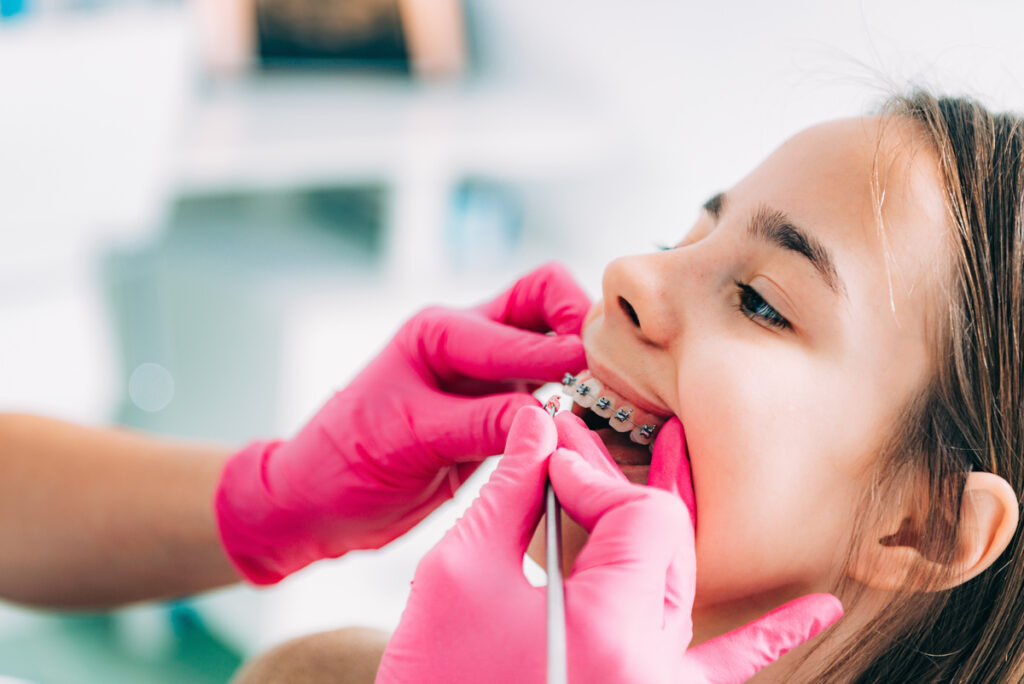
You finally got your braces off, ready to show the world your beautifully straightened smile, only to discover chalky white spots dotting your teeth where the brackets used to be. These marks, called decalcification or enamel demineralization, develop when plaque accumulates around brackets during orthodontic treatment, creating areas where minerals have leached from the tooth surface. While these spots won’t harm your oral health, they can make you feel self-conscious about the smile you worked so hard to achieve.
At Winchester Dental Group in Temecula, we understand how frustrating it can be to finish orthodontic treatment only to face a new cosmetic concern. Our team offers several effective solutions to address white spots and help you feel confident about your smile again.
What Causes White Spots After Braces?
White spots form when acids from bacteria dissolve minerals from your tooth enamel. During orthodontic treatment, brackets and wires create small spaces where food particles and plaque can hide. If you struggled to clean thoroughly around your braces, these areas became vulnerable to acid attacks that stripped away minerals, leaving behind those telltale white marks.
The good news is these spots only affect the outer layer of your enamel. They’re essentially the earliest stage of tooth decay, caught before a cavity forms. This means several treatment options can address them successfully.
Resin Infiltration Treatment
One of the most conservative approaches to treating white spots is resin infiltration. This procedure works by filling the porous areas of demineralized enamel with a special resin that blends with your natural tooth color.
During the treatment, your dentist applies a gel to open up the pores in the affected enamel. After rinsing, they apply the infiltrating resin, which seeps into those tiny spaces and hardens. The entire process takes about an hour and requires no drilling or anesthesia. Many patients see immediate improvement in the appearance of their white spots.
This method works best for mild to moderate white spots. The treatment is also reversible, meaning if you decide you want a different approach later, you have options.
Microabrasion
Microabrasion offers another minimally invasive solution for white spots. This technique removes a thin layer of enamel using a mild acid combined with gentle polishing.
Your dentist applies an acidic paste to the affected areas and uses a special handpiece to gently abrade the enamel. This removes the outer layer where the white spots exist, revealing the healthier enamel underneath. The procedure typically requires no anesthesia and can be completed in a single visit.
Microabrasion works well for spots in the outermost layers of enamel. However, if white spots extend deeper into the tooth structure, this method may not fully address them.
Professional Teeth Whitening
Sometimes the simplest solution proves effective. Professional teeth whitening can help blend white spots with the surrounding tooth structure by lightening your entire tooth surface to a more uniform shade.
While whitening won’t remove the white spots themselves, it reduces the contrast between the spots and your natural tooth color, making them far less noticeable. This approach works best when combined with other treatments or for very mild cases where the spots are barely visible. Your dentist might recommend starting with whitening to see how much improvement you can achieve before considering more invasive options.
Dental Veneers for Severe Cases
For more severe cases where white spots are extensive or other treatments haven’t provided satisfactory results, veneers offer a comprehensive solution. These thin shells of porcelain or composite material cover the front surface of your teeth, completely concealing any discoloration.
The Veneer Process
Veneers require removing a small amount of tooth enamel to make room for the restoration. While this makes them more invasive than other options, they provide dramatic results and can address multiple cosmetic concerns at once, including shape, size, and alignment issues. Most patients receive veneers over two appointments.
Expected Results
During the first visit, your dentist prepares your teeth and takes impressions. At the second appointment, they bond the custom-made veneers to your teeth. The results typically last 10 to 15 years with proper care.
Choosing the Right Treatment
Several factors influence which treatment will work best for your white spots. Your dentist will help you weigh these considerations during your consultation.
- Severity of discoloration: Mild spots may respond well to conservative treatments, while severe cases might need more comprehensive solutions.
- Location of white spots: Spots on front teeth showing when you smile might warrant more aggressive treatment than those on less visible teeth.
- Your budget: Treatment costs vary significantly, with resin infiltration and microabrasion typically costing less than veneers.
- Your time commitment: Some treatments require multiple visits, while others can be completed in one appointment.
- Long-term goals: Consider whether you want a quick fix or a solution addressing other cosmetic concerns as well.
Discussing these factors with your dentist helps ensure you choose the most appropriate treatment for your situation.
Preventing Future White Spots
If you’re still wearing braces or plan to get them in the future, you can take steps to prevent white spots from forming. Brush thoroughly after every meal, paying special attention to the areas around brackets. Brushing your teeth twice daily and flossing once daily helps remove plaque before it can cause damage.
Use a fluoride mouthrinse daily to strengthen your enamel. Your dentist might also recommend fluoride treatments during your orthodontic care. Regular dental cleanings throughout your orthodontic treatment help remove plaque buildup that your home care might miss.
Get Your Confident Smile Back at Winchester Dental Group in Temecula
White spots after braces don’t have to diminish the results of your orthodontic treatment. Dr. Matthew King and Dr. Andrew Arriola bring years of experience helping patients achieve the beautiful, even-toned smiles they deserve. Dr. Arriola graduated from UCLA Dental School in 1986 and has been serving the Temecula Valley for over 25 years, while Dr. King offers advanced cosmetic treatments to address white spots with minimal intervention. Our practice accepts most major PPO insurance plans, making quality dental care accessible to families throughout the area.
We’re committed to providing personalized, compassionate care in a comfortable environment where you can feel at ease discussing your concerns. Ready to eliminate those white spots and show off your smile with confidence? Contact us today to schedule a consultation and discover which treatment option best fits your needs.