
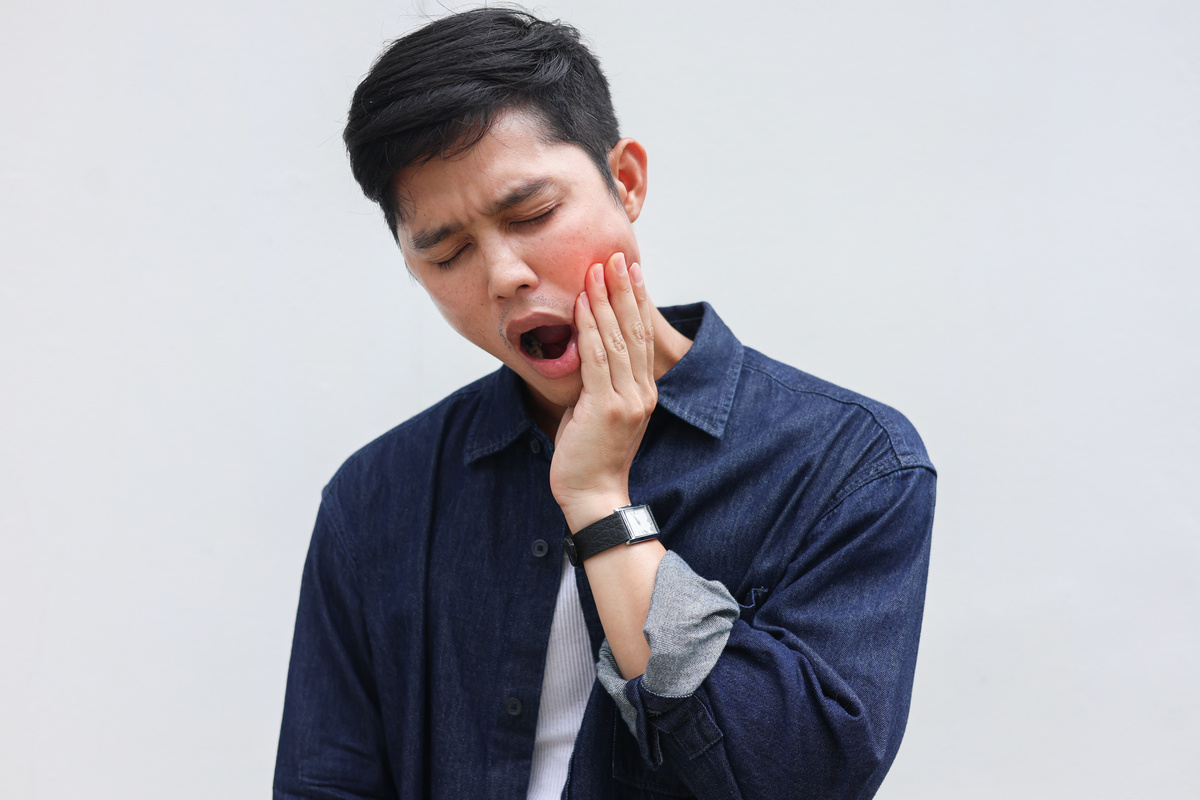
Jaw pain that lasts more than a few days usually points to something beyond muscle strain. The temporomandibular joint connects your jawbone to your skull, and problems with this joint create symptoms that affect eating, talking, and sleeping. Recognizing these signs early helps you address the issue before it limits your daily activities.
At Winchester Dental Group in Temecula, Dr. Matthew King and Dr. Andrew Arriola treat TMJ disorders with approaches tailored to each patient’s situation. Dr. King brings over eight years of dental experience to the practice, while Dr. Arriola has served the Temecula Valley for more than 25 years. Understanding what TMJ disorder looks like helps you know when to seek professional care.
Persistent Clicking or Popping When You Open Your Mouth
A clicking sound when you chew or yawn often signals that the disc inside your temporomandibular joint has shifted position. This disc cushions the joint, and when it moves out of alignment, you hear a pop or click. The sound might happen every time you open your mouth wide, or it might come and go depending on what you’re eating.
Some clicking is normal and doesn’t require treatment. However, when the noise pairs with pain or your jaw catches momentarily, the joint isn’t functioning smoothly. The clicking typically gets louder when you eat chewy foods like bagels or steak. If you notice the sound on one side more than the other, that side of the joint likely needs attention.
Morning Headaches That Start Near Your Ears
Waking up with headaches concentrated around your temples and ears suggests your jaw muscles are working too hard while you sleep. TMJ disorder creates tension that radiates from the joint into surrounding areas. Teeth grinding often accompanies this problem, putting extra pressure on the joint throughout the night.
These headaches feel different from tension headaches because they begin near your jaw and move upward. The pain usually worsens as the day continues if you clench your jaw without realizing it. Stress makes both grinding and clenching worse, creating a cycle where jaw tension leads to headaches that increase your stress level.
Difficulty Opening Your Mouth Fully
Trouble opening your mouth wide enough to eat thick sandwiches or bite into an apple indicates restricted joint movement. The limitation develops gradually as inflammation builds or the disc inside the joint shifts further out of position. You might first notice the problem during dental appointments when you struggle to keep your mouth open.
How Joint Restriction Affects Daily Activities
The restriction makes certain foods difficult to eat. Corn on the cob, large burgers, and crusty bread all require a wider jaw opening than you can manage comfortably. Some people avoid these foods without realizing their jaw movement has become limited. The restriction can progress to the point where fitting three fingers vertically in your mouth becomes impossible.
When to Seek Treatment for Limited Movement
Early treatment prevents the joint from locking completely. A 2021 survey by the American Dental Association’s Health Policy Institute showed that over 70% of dentists noticed increased signs of teeth grinding and clenching in their patients, conditions that often contribute to TMJ problems. If your jaw feels stuck when you wake up or you need to work it loose before you can open fully, the problem needs professional attention.
Pain That Increases During Talking or Eating
TMJ pain typically worsens with repeated jaw movement. Long conversations put strain on a joint that’s already inflamed or misaligned. Chewing tough or chewy foods creates similar stress. The pain might start as a dull ache near your ear and sharpen when you move your jaw, or it might build gradually throughout a meal.
The discomfort centers around the joint itself, but can spread into your cheek, neck, or shoulder if surrounding muscles compensate for the joint problem. Some patients describe the pain as a constant pressure, while others feel sharp jabs with certain movements. The pain often eases when you rest your jaw, but returns as soon as you start using it again.
Ear Pain Without Signs of Infection
Pain deep inside your ear that has nothing to do with your hearing points directly to the temporomandibular joint. The joint sits immediately in front of your ear canal, so inflammation or misalignment creates sensations that mimic ear problems. Many patients visit their primary doctor first, only to learn their ears are healthy.
The pain might feel like pressure, fullness, or a dull ache that won’t respond to typical ear infection treatments. Some people experience ringing in their ears or feel like they’re underwater. When your doctor rules out ear issues but the discomfort continues, TMJ disorder becomes the likely cause. Issues with jaw position can also affect facial symmetry, which sometimes overlaps with cosmetic dentistry concerns.
How Dentists Diagnose TMJ Disorder
Your dentist evaluates TMJ disorder through examination and imaging. During the physical exam, the dentist places fingers over your jaw joints while you open and close your mouth, listening for clicks or grinding sounds. They measure how wide you can open and check for tenderness in the muscles around your jaw and neck.
X-rays reveal the bone structure and show whether arthritis or damage affects the joint. CT scans provide more detailed images of the bony components. In some cases, an MRI offers the clearest view of soft tissues, including the disc inside the joint and surrounding ligaments. The diagnostic process rules out other conditions with similar symptoms, such as dental infections or sinus inflammation.
Treatment Approaches for TMJ Relief
Treatment varies based on what’s causing your symptoms. Many patients benefit from a custom night guard that prevents grinding and reduces pressure on the joint during sleep. The guard creates space between your upper and lower teeth, giving the joint time to heal without constant force.
Physical therapy strengthens jaw muscles and improves the range of motion. Your dentist might recommend specific exercises you perform at home, such as gentle stretching or resistance movements. Anti-inflammatory medications manage pain while other treatments address the underlying problem. Heat or ice applications provide temporary relief for acute flare-ups.
Bite alignment plays a significant role in many TMJ cases. When your teeth don’t meet properly, your jaw compensates in ways that strain the joint. Correcting alignment through orthodontic treatment or dental restorations often resolves symptoms that stem from bite problems. Dr. King and Dr. Arriola evaluate how your teeth come together and recommend adjustments when misalignment contributes to joint stress.
Find TMJ Relief at Winchester Dental Group in Temecula
TMJ disorder rarely improves without treatment, and waiting often makes the problem more difficult to manage. Dr. Matthew King and Dr. Andrew Arriola provide personalized care for patients throughout Temecula dealing with jaw pain and related symptoms. Dr. King brings over eight years of experience in dentistry, while Dr. Arriola has practiced in the Temecula Valley for more than 25 years and is affiliated with the American Dental Association, the Academy for Sports Dentistry, and the ICOI (International Congress of Oral Implantologists).
Winchester Dental Group in Temecula accepts most major PPO plans and offers flexible payment options through Sunbit and CareCredit to make treatment accessible. Schedule your consultation to discuss your symptoms and explore solutions tailored to your needs.